12 May 2020
The first demo of the language that was to become JavaScript took
place almost exactly 25 years
ago.
The language was released, as LiveScirpt, in a beta of
Netscape Navigator in the fall of 1995, and renamed to JavaScript
later that year. Sometime late that year I began work on the first
edition (O’Reilly published it as the “beta edition”) of JavaScript:
The Definitive Guide, and it was published in August of 1996, meaning
that it is going on 24 years old now.
With the seventh edition coming out in just
a few weeks, I want to take a trip down memory lane and blog about
some old weird features of JavaScript and of the early web platform
that we can now, mercifully, forget about.
More …
03 May 2020
The seventh edition of my book, JavaScript: The Definitive Guide is
scheduled for release less than a month from today. If you own the
sixth edition, it is very much time for an upgrade. This post explains
what has changed in this new edition.
-
Most importantly, this edition is up-to-date and covers the very
newest ES2020 features like ?. and ??. The sixth edition covered
ES5, which means that I have added documentation of all the language
features of ES6, ES2016, ES2017, ES2018, ES2019 and ES2020 for this
update.
-
The first thing you’ll notice when you see the new edition
More …
27 Apr 2020
Here’s the marketing copy I wrote for the back cover of the book:
JavaScript is the programming language of the web and is used by more
software developers today than any other programming language. For
nearly 25 years this best seller has been the go-to guide for
JavaScript programmers. The seventh edition is fully updated to cover
the 2020 version of JavaScript, and new chapters cover classes,
modules, iterators, generators, Promises, async/await, and
metaprogramming. You’ll find illuminating and engaging example code
throughout.
More …
27 Apr 2020
I’ve started a new blog to celebrate the fact that after 9 years there
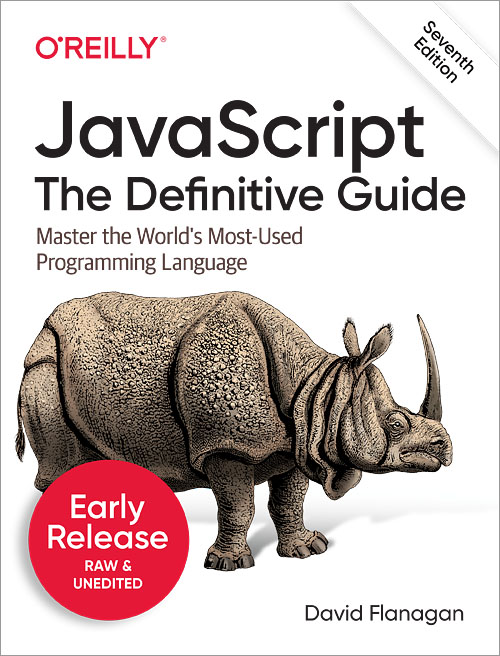
will finally be a new seventh edition of JavaScript: The Definitive Guide!
More …

